Describe the reader, not just the plot
A cover helps a reader decide whether a book is for them. Identify the genre, reading experience, and emotional tone. A detailed synopsis helps, but a clear audience description often makes the design direction more useful.
Use references to explain decisions
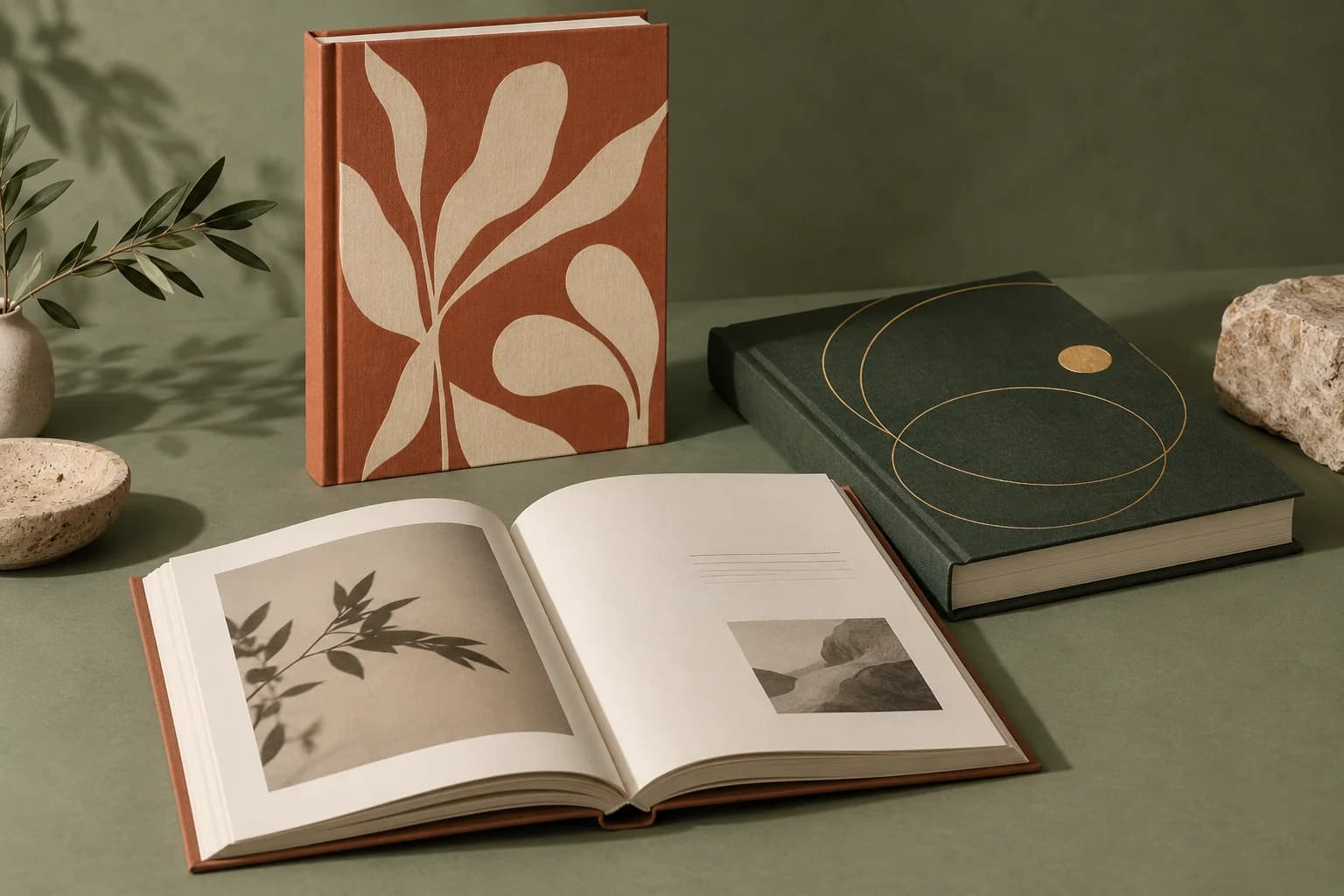
Collect a small number of covers and say what you respond to: typography, atmosphere, color, or composition. References should communicate preferences, not become instructions to reproduce another designer’s work.
Make the practical details explicit
Share the exact title, subtitle, author name, planned formats, and any required copy. Print wraps also need trim size, page count, paper, and printer specifications. Do not finalize a spine until those details are stable.
Review at the size readers will see
View concepts as small thumbnails as well as full-sized artwork. Can the title still be read? Does the visual hierarchy communicate the right emphasis? For print, review a physical proof when possible.
Further reading
Amazon KDP: paperback cover requirements ↗
Use your chosen printer’s current specifications to confirm cover dimensions, bleed and spine requirements before final production.
An introductory resource prepared for this website. Discuss your manuscript and requirements before making production decisions.
Put the guide to work.
Write down one decision this article helped clarify and one question you still need to answer. Bring both to your next project conversation.
Discuss your book